
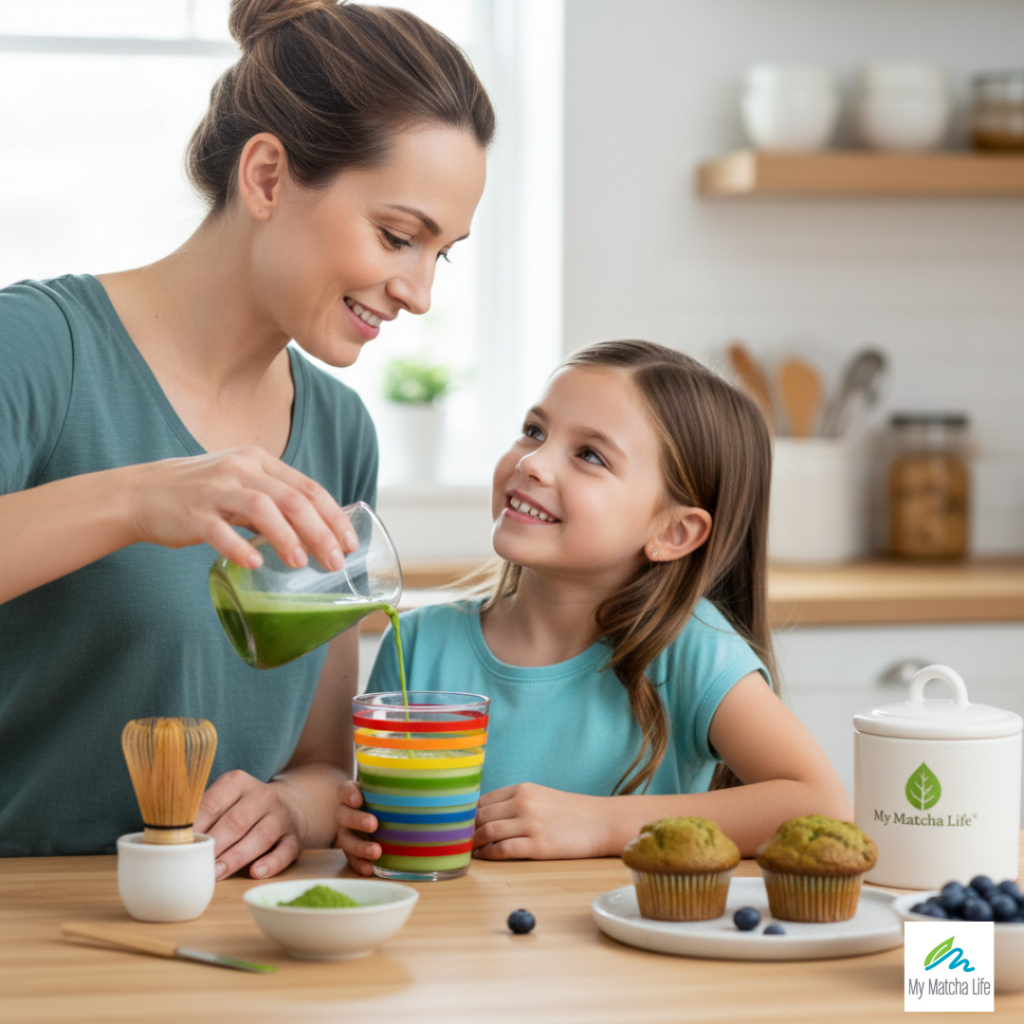
Is Matcha Tea Safe for Kids to Drink? Caffeine, Grades, and Nutrition from My Matcha Life®
As the owners of My Matcha Life®, we often get asked if matcha is suitable for children. It’s a great question, and one that deserves a thoughtful, nuanced answer. In a world where parents are increasingly mindful of what their children consume, diving into the specifics of matcha, its caffeine content, and its potential benefits is crucial.
First off, let’s address the elephant in the room: caffeine. Matcha, being a form of green tea, naturally contains caffeine. A typical serving of matcha (around 1 gram of powder) generally contains between 20-35mg of caffeine. This can sound like a lot, especially when we think of caffeine as an “adult” stimulant. However, it’s important to put this into perspective and compare it to other things children often consume without a second thought.
Comparing Caffeine: Matcha vs. Common Treats
It’s helpful to see how the caffeine in a single serving of matcha compares to things many adults readily give their kids:
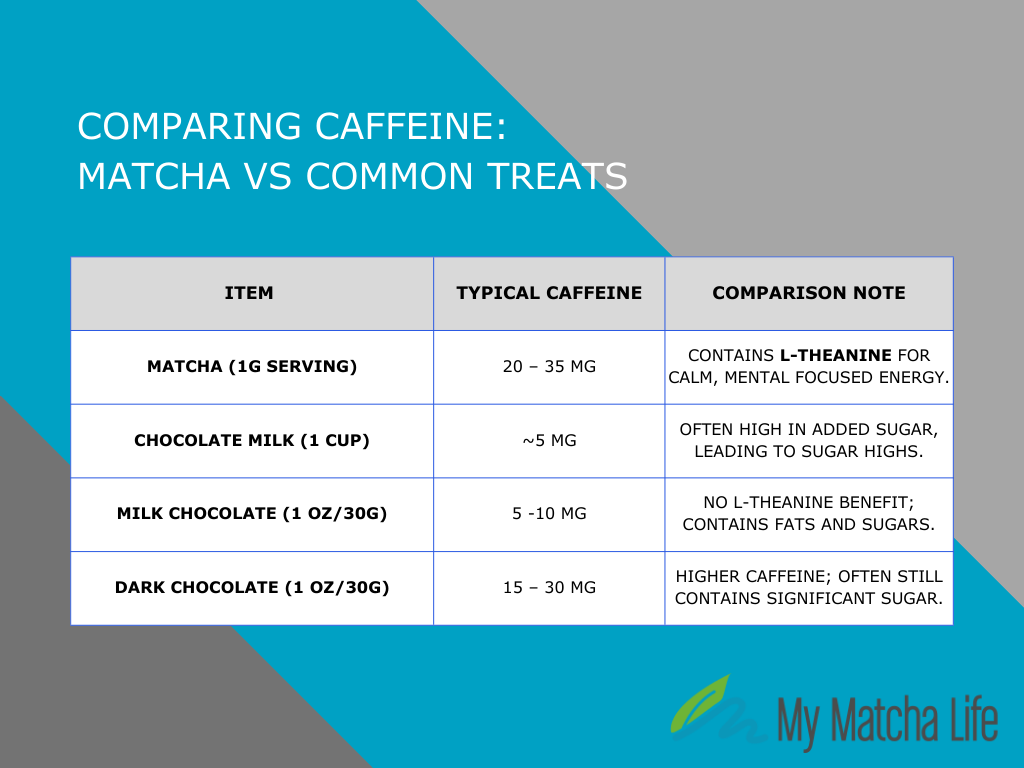
Then there are sugary drinks and foods. While they don’t contain caffeine, the “sugar highs” they produce often mimic the jitteriness associated with caffeine, sometimes even more intensely. These sugar rushes are fleeting, often followed by a crash, which can lead to irritability and difficulty concentrating. Matcha, on the other hand, contains L-theanine, an amino acid that works synergistically with caffeine to provide a calmer, sustained energy boost, and clear focus, without the jitters or the subsequent crash. This is a significant difference when considering the overall impact on a child’s delicate system.
So, if children can consume chocolate with its caffeine content, and sugary treats that cause energy spikes, where does matcha fit in? The key lies in moderation and understanding the unique properties of matcha.
🍵
Matcha Grades and Caffeine Levels
Not all matcha is created equal, which affects its caffeine. Understanding the grade can help you choose the best option if you decide to introduce it to your child:
- Ceremonial Grade: Made from younger, shade-grown leaves. Ceremonial matcha tea has a more balanced caffeine profile and higher L-theanine content, making the energy release smoother and the taste milder. Caffeine content range of ceremonial matcha: 30-35mg per gram.
- Second or Summer Harvest, and Culinary Grade: Second Harvest matcha is made from more mature leaves and often used when a stronger flavor is needed. And Culinary matcha is ideal for baking or lattes. These grades have a lower caffeine content, but also a much lower l-theanine content. Not having the high l-theanine to offset the caffeine effects can result in a slightly jittery feeling. Caffeine content range of second harvest and culinary grades of matcha: 20-25mg per gram.
For children, if you choose to introduce matcha, a high-quality ceremonial grade might be a gentler introduction due to its smoother energy profile and better taste, which means less need to add sweeteners.
Beyond caffeine, matcha offers a wealth of antioxidants, vitamins, and minerals. It’s packed with catechins, particularly EGCG, which are powerful antioxidants known for their immune-boosting properties. It also contains vitamins A and C, and essential minerals like potassium and iron. When considering the nutritional profile, matcha offers a far more beneficial alternative to many highly processed, sugary drinks and snacks that children frequently consume.
However, a word of caution: every child is different. What works for one child might not work for another. Factors like age, weight, and individual sensitivity to caffeine all play a role. For very young children or those particularly sensitive, it might be best to avoid matcha or introduce it in very small quantities.
 ✅
✅
Practical Considerations for Serving Matcha to Kids
If you’re thinking about giving your child matcha, awareness and moderation are essential:
- Start Small: Begin with a very small serving—perhaps a quarter or half of an adult serving (5-17mg of caffeine). Observe how your child reacts.
- Timing is Key: Avoid giving matcha later in the day due to its stimulating effects. Morning or early afternoon is generally best.
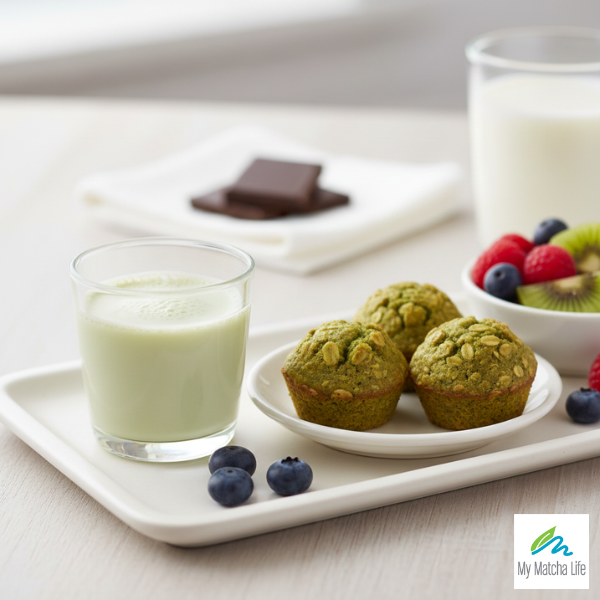
- Dilution: Consider adding matcha to smoothies, oatmeal, or even baked goods, which can dilute the caffeine content and make it more palatable for kids.
- Listen to Your Child: Pay attention to their energy levels, mood, and sleep patterns. If you notice any adverse effects, discontinue use.
- Consult a Pediatrician: When in doubt, always consult your child’s pediatrician, especially if your child has any underlying health conditions or sensitivities.
At My Matcha Life®, our philosophy is about enjoying the goodness of matcha responsibly. While matcha offers a healthier alternative to many common childhood treats, it’s essential to approach its introduction with awareness and moderation.
🔑
Final Takeaway
For most older children, a small, diluted serving of high-quality matcha can be a safe and nutritionally superior alternative to many sugary, processed drinks, provided it is consumed in moderation and timed appropriately. The unique combination of caffeine and L-theanine in matcha offers a gentle, calm, focused energy without the jitters associated with sugar rushes.
Looking for a clean safe matcha tea, shop My Matcha Life® teas today.
Leave a Reply
You must be logged in to post a comment.