
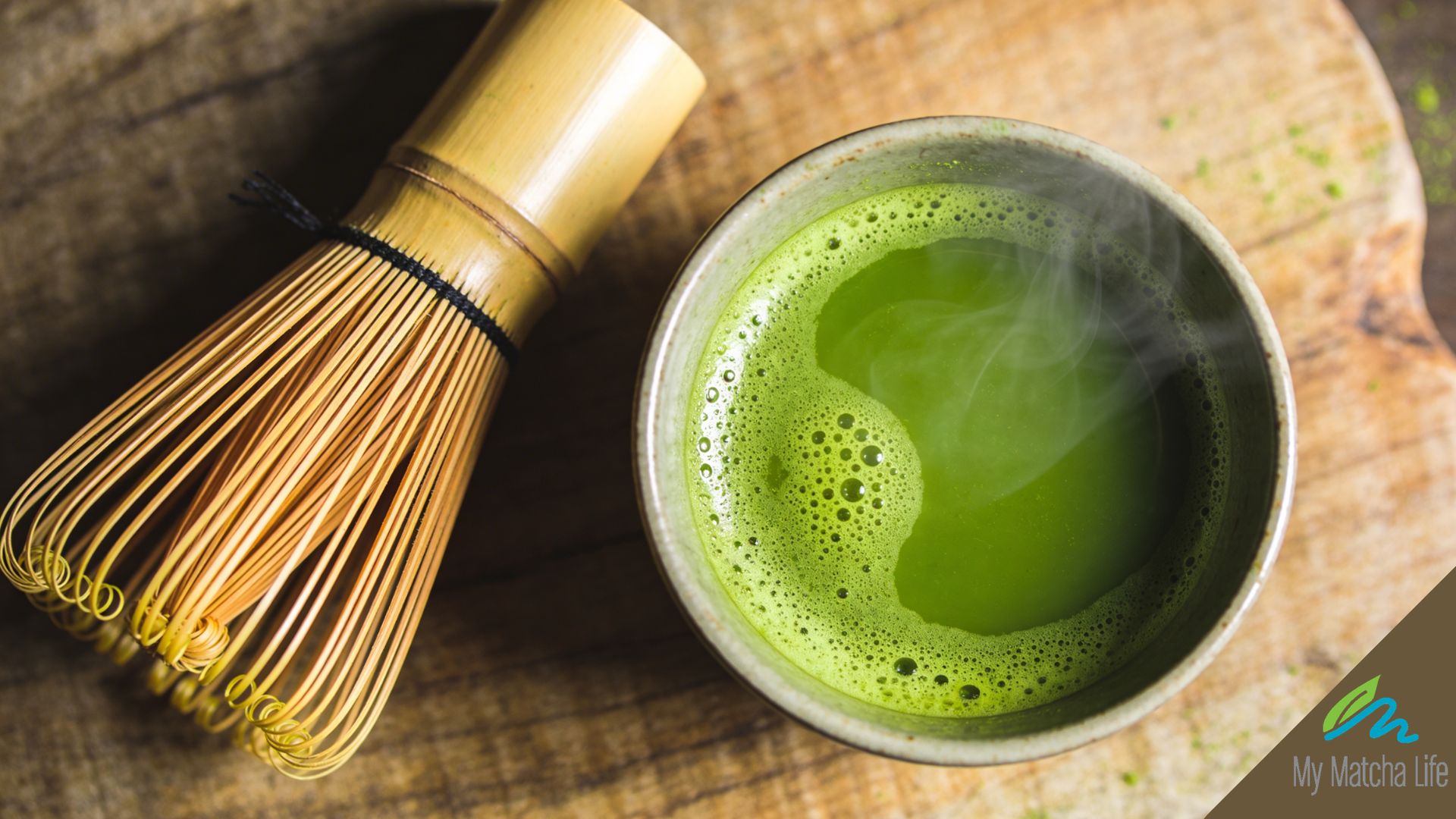
 Why Does Matcha Make You Feel Calm But Energized?
FAQ: Why does matcha make you feel calm but energized?
Quick Answer: Matcha contains L-theanine, an amino acid that promotes mental and emotional calmness and helps to reduce feelings of anxiety. When combined with caffeine, it creates a balanced state of alert calm — often described as “focused energy.” In this day of ‘distractions’, focused energy is something we can all use! Did you know… high quality matcha is nature’s highest source of L-theanine?
If you’ve ever sipped a cup of matcha and thought, “Why do I feel so good right now?” — you’re not alone. Matcha drinkers around the world describe the same thing: a smooth, clear-headed energy that feels nothing like the buzz-and-crash of coffee. You feel awake, but you also feel calm. Focused, but not wired. Productive, but not anxious.
This isn’t just a placebo effect or a pleasant morning ritual. There is fascinating science behind why matcha creates this unique state of mind — and it all starts with one remarkable amino acid called L-theanine.
What Is L-Theanine, and Where Does It Come From?
L-theanine is a naturally occurring amino acid — and here’s what makes it truly special: it is found almost exclusively in the Camellia sinensis plant, the tea plant. Unlike most amino acids, which are common across a wide variety of foods, L-theanine is unique to tea. You won’t find meaningful amounts of it in coffee, in herbs, in vegetables, or in fruits. It is one of nature’s most distinctive gifts — and it comes almost entirely from one plant.
Within the tea plant, L-theanine is produced in the roots and then transported up into the leaves, where it accumulates over time. This is why growing conditions and harvest timing matter so much. In standard green tea, you’ll find some L-theanine. In high-quality matcha, you’ll find significantly more.
Why? Because premium matcha is shade-grown during the final weeks before harvest. When the tea plant is deprived of direct sunlight, it produces more L-theanine as a response — the plant essentially concentrates its most calming, most nourishing compounds in the leaves. This is why high-quality, shade-grown matcha is considered nature’s highest source of L-theanine among all teas and natural food sources.
How L-Theanine Creates Calm, Focused Energy
So what does L-theanine actually do once you drink it?
L-theanine crosses the blood-brain barrier and promotes the production of alpha brain waves — the same calm, alert mental state associated with meditation, creative flow, and deep focus. Alpha waves are what your brain naturally produces when you are relaxed but fully present. They are the opposite of the stressed, scattered mental state of anxiety or overwhelm.
In simple terms, L-theanine shifts your brain into its most productive gear.
On its own, L-theanine promotes:
- Reduced feelings of anxiety and mental stress
- A sense of emotional and mental calmness
- Improved attention and mental clarity
- A relaxed — but alert — state of mind
But here is where matcha becomes something truly special.
The Magic Combination: L-Theanine + Caffeine
Matcha contains caffeine — but it behaves very differently from the caffeine in coffee. That’s because of the L-theanine.
When L-theanine and caffeine are consumed together, they work in a synergistic partnership that neither compound achieves alone. Caffeine activates your alertness. L-theanine moderates and smooths that alertness — removing the sharp edges of jitteriness, anxiety, and the inevitable crash.
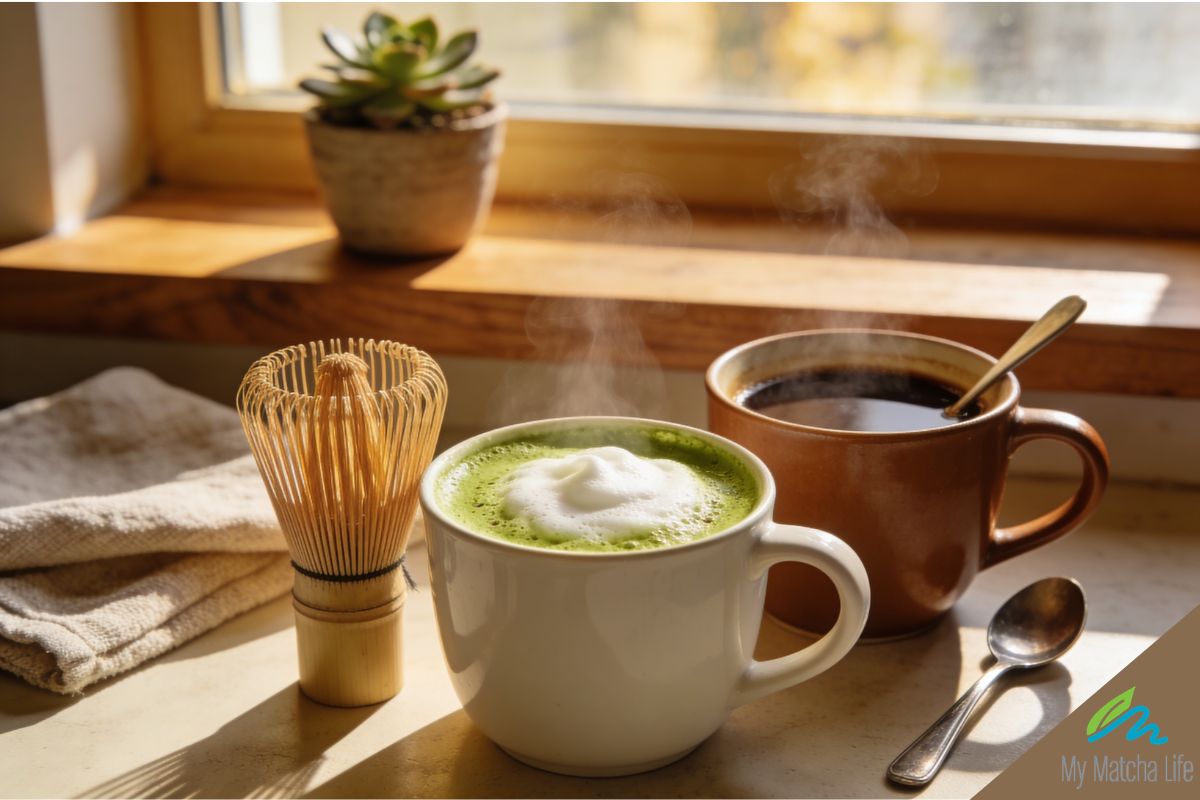
The result? “Focused energy” — the state many matcha drinkers describe as feeling like the best, most productive version of themselves.
Think about the moments in your life when you most need to perform:
- Studying for an exam or mastering a new skill
- Giving a presentation or leading a meeting
- Training for a sport or physical performance
- Writing, painting, or creating something meaningful
- Getting through a long afternoon without losing momentum
In all of these situations, focused energy is exactly what you need. Not the anxious, overstimulated kind. Not the foggy, half-awake kind. The clear, calm, sustained kind — where your mind is sharp and your body feels at ease.
That is the gift of L-theanine and caffeine working together. And in a world full of distractions, notifications, and demands on our attention, focused energy is something we can all use.
Matcha and Dopamine: The Feel-Good Connection
Here’s another reason matcha makes you feel so good — and one that doesn’t get talked about nearly enough: matcha supports dopamine production.
Dopamine is one of the brain’s most important neurotransmitters. It plays a central role in motivation, mood, reward, and the feeling of satisfaction you get when you accomplish something. Low dopamine is associated with brain fog, low motivation, difficulty concentrating, and a general sense of flatness.
L-theanine promotes the release of dopamine in the brain, contributing to that sense of quiet pleasure and well-being that matcha drinkers so often describe. It also promotes GABA (gamma-aminobutyric acid), another neurotransmitter that helps reduce anxiety and supports emotional balance.

This is why matcha doesn’t just sharpen your focus — it can lift your mood. The calm you feel isn’t just the absence of stress. It’s an active, positive state, supported by your own brain chemistry.
Combined with matcha’s EGCG antioxidants, which reduce neuroinflammation and support overall brain health, matcha is one of the most nourishing things you can offer your mind.
Why High-Quality Matcha Makes All the Difference
Not all matcha delivers the same L-theanine levels — and this is critically important to understand.
L-theanine content is directly related to matcha quality. Here’s why:
- Shade-growing is what triggers elevated L-theanine production. Low-grade matcha is often grown in full sun and lacks the shade-growing process that concentrates L-theanine in the leaves.
- First-harvest leaves contain more L-theanine than older, later-harvested leaves. Premium ceremonial-grade matcha is hand-picked during the first flush of spring, when L-theanine levels are at their peak.
- Whole-leaf grinding means nothing is lost. When the entire shade-grown leaf is stone-ground into fine powder, all of its L-theanine — and all of its other nutrients — are fully preserved and consumed.
Lower-grade matcha, made from sun-grown, later-harvested leaves (or leaves with stems and twigs left in), will not only taste more bitter and look more dull — it will also deliver significantly less L-theanine. You simply won’t feel the same effect.
This is why choosing high-quality matcha from a trusted source isn’t just about taste — it’s about whether you actually experience the benefits.
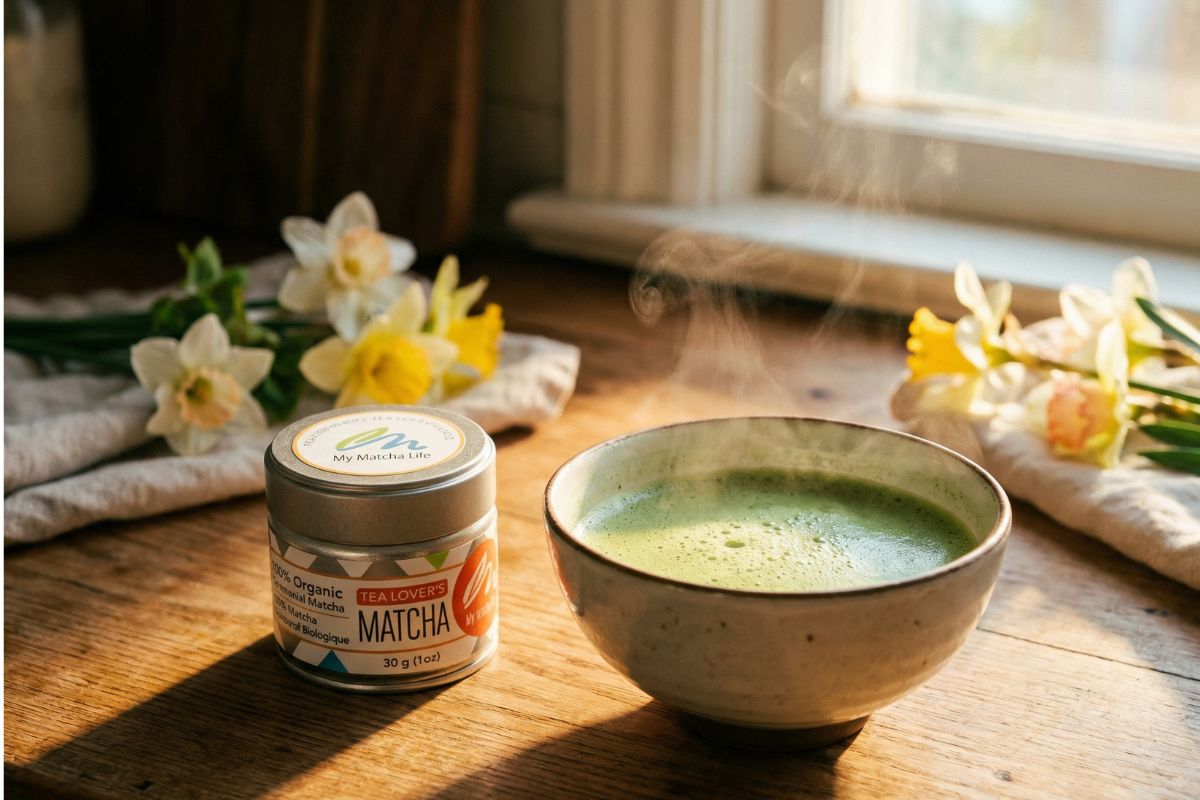
At My Matcha Life®, our Tea Lover’s Organic Ceremonial Matcha is shade-grown, first-harvest, and stone-ground to preserve maximum L-theanine content. It’s vibrant emerald green, silky smooth, and crafted specifically for daily drinking — because we believe matcha’s greatest benefits are felt consistently, over time.
How to Make the Most of Matcha’s Calming Energy
To get the full focused-energy benefit of matcha, a few simple tips:
Choose ceremonial-grade or premium matcha. Look for vibrant green color (not dull or yellowish), a fine silky texture, and a fresh, slightly sweet aroma. These are signs of high L-theanine content and quality processing.
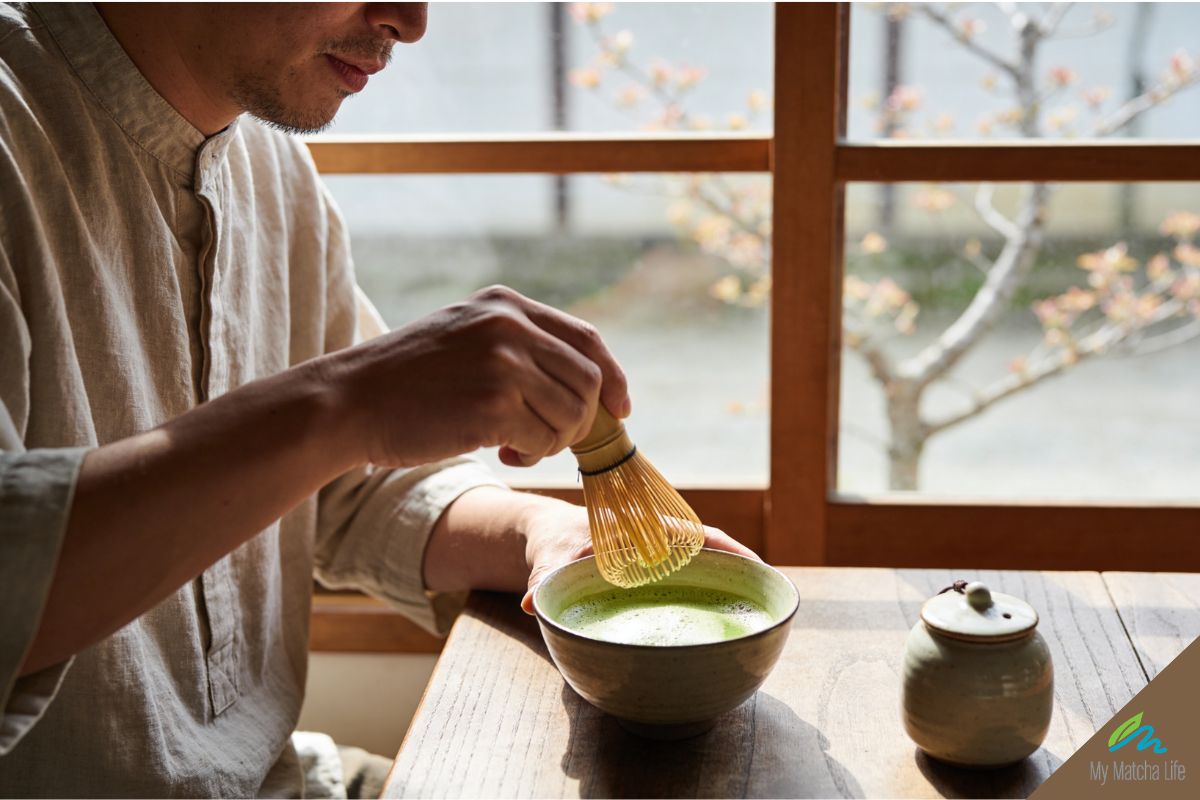
Drink it mindfully. One of the reasons matcha has been part of Japanese meditation and tea ceremony culture for centuries is that the act of preparing and drinking it is itself calming. Give yourself a few quiet minutes with your matcha — even that small ritual supports the alpha wave state L-theanine promotes.
Time it well. Matcha’s calm energy is ideal for the morning or early afternoon — times when you want to be sharp and focused. Because the caffeine in matcha is gentler and more gradually absorbed than coffee, most people find matcha far easier on the system and less likely to interfere with sleep when consumed before mid-afternoon.
Be consistent. Some of matcha’s most meaningful benefits — including its mood-supporting and brain-health effects — are cumulative. Daily matcha, made a ritual, is where the real transformation happens.
The Bottom Line: Matcha’s Calm Energy Is Real — and It’s Unique
The feeling you get from matcha isn’t accidental, and it isn’t just caffeine. It’s the result of a one-of-a-kind combination of compounds found almost nowhere else in nature — with L-theanine at the center.
- L-theanine is unique to the tea plant (Camellia sinensis)
- High-quality, shade-grown matcha is nature’s richest source of L-theanine
- L-theanine promotes alpha brain waves, reduces anxiety, and supports dopamine production
- Combined with caffeine, it creates a state of focused, calm, sustained energy
- Quality matters — more L-theanine means more benefit
In a world that constantly pulls your attention in a dozen directions, matcha offers something genuinely rare: the ability to be present, focused, and calm — all at the same time.
That’s not just a wellness trend. That’s nature doing something extraordinary.
Ready to Feel the Difference?
Experience calm, focused energy with high-quality ceremonial matcha — rich in L-theanine and crafted for daily wellness.
Shop Tea Lover’s Organic Ceremonial Matcha →
FAQ: Matcha, L-Theanine & Calm Energy
Why does matcha make you feel calm but energized?
Matcha contains L-theanine, an amino acid that promotes mental and emotional calmness and helps reduce feelings of anxiety. When combined with matcha’s natural caffeine, it creates a balanced state of alert calm — often described as “focused energy.” Did you know that high-quality matcha is nature’s highest source of L-theanine?
Is L-theanine only found in matcha?
L-theanine is found almost exclusively in the Camellia sinensis plant — the tea plant. It is not found in meaningful amounts in coffee, herbs, fruits, or vegetables. Within tea, high-quality, shade-grown matcha contains the highest concentrations of L-theanine of any natural food source.
Does matcha increase dopamine?
Yes. L-theanine in matcha promotes the release of dopamine and GABA in the brain — neurotransmitters associated with mood, motivation, and emotional well-being. This is part of why matcha drinkers often describe not just sharper focus, but an uplifted, positive state of mind.
Why doesn’t matcha cause jitters like coffee?
Matcha’s caffeine is naturally moderated by L-theanine and EGCG catechins, which slow caffeine absorption into the bloodstream. This creates a gradual, steady release of energy rather than a sharp spike — which is why most matcha drinkers experience calm alertness instead of anxiety or jitteriness.
Does the quality of matcha affect L-theanine levels?
Absolutely. L-theanine content is directly influenced by shade-growing practices and harvest timing. Premium, shade-grown, first-harvest matcha contains significantly more L-theanine than low-grade, sun-grown matcha. If you want the focused-energy effect, quality matters.
How much matcha should I drink to feel the L-theanine benefits?
For most people, 1–2 servings of high-quality matcha daily is enough to experience the calm, focused energy that L-theanine and caffeine together provide. The benefits are also cumulative — consistent daily matcha, as part of a wellness routine, is where the deeper mood and focus benefits are felt over time.
Leave a Reply
You must be logged in to post a comment.