Matcha Tea Lead Free
Is Matcha Tea Lead Free?
Curious about the lead content in Matcha tea? Have you read articles suggesting matcha might not be as safe and healthy to drink as you’ve heard?
In this post, we’ll explore the lead levels and heavy metals in Japanese Matcha green tea powder, explain why independent testing for every batch of matcha is important, and provide the actual laboratory blood lead test results of a 20-year daily matcha drinker.
We’ll also explain how My Matcha Life® ensures the safety of its matcha products through food safety standards and rigorous testing.

Left: My Matcha Life CEO and Co-Founder, Calli O’Brien, learning the finer nuances of matcha tea cultivation from a Japanese tea master during spring harvest. Uji, Japan. | Right: Lab attendant testing matcha powder (image created with the help of AI).
Wondering about the presence of lead in Matcha green tea is a valid concern given that traces of heavy metals such as lead, are pretty much everywhere, even in our own bodies.
While no soil on Earth can claim to be completely lead-free, the rural tea fields of Japan come remarkably close. In a study involving 139 samples of Japanese green tea, not a single one was found to exceed safe lead levels.
Japanese matcha is grown on well-tended low mountain plateaus that are among the most carefully managed agricultural environments in the world today.
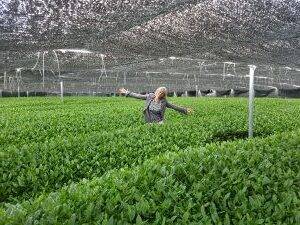
MML Co-Founder, Zee Cajthamlova, under shading for first harvest tea leaves. Nishio, Japan
Understanding Lead Exposure
Before diving into the details of lead in matcha powder, let’s get the low down on why lead exposure is something to be cautious of.
Excessive exposure to lead can lead to reduced brain function and motor skills, kidney and cardiovascular issues. It’s the most common contaminant found in urban soil, primarily stemming from the historical use of lead in gasoline, pipes, and paint.
You’ll often find relatively high concentrations of lead in areas around industrial areas, busy roads and older homes. It’s particularly concerning for children, as they tend to absorb more of it than adults.
Does Matcha Green Tea Powder Naturally Contain Lead?
Yes, but that statement needs some context.
Lead is a naturally occurring element found throughout the environment. Small amounts can be present in soil, rocks, water, and even the air.
Because plants absorb nutrients and minerals from the soil, many foods contain trace amounts of naturally occurring lead, including leafy vegetables, root vegetables, grains, herbs, spices, cocoa, and tea.
Matcha tea is no exception.
Unlike brewed green tea, however, matcha is unique because you consume the entire tea leaf after it has been stone-ground into a fine powder. With regular green tea, the leaves are steeped and then discarded. With matcha, everything in the leaf is consumed.
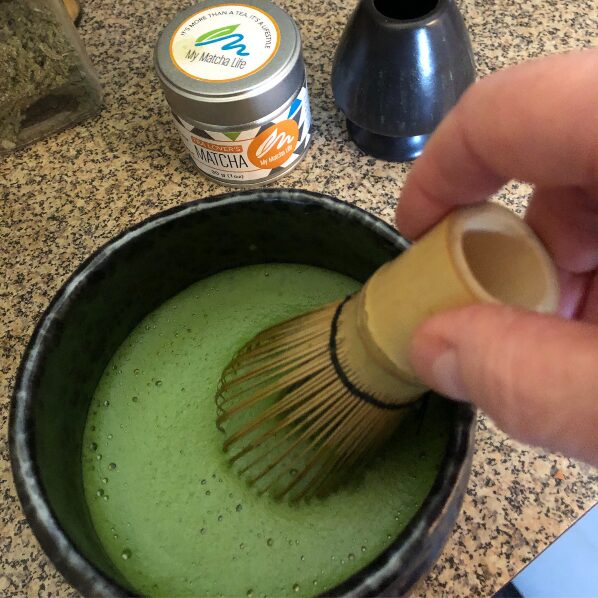
Whisked matcha tea with Tea Lover’s Organic Ceremonial Matcha tea.
That’s one of the reasons matcha tea is celebrated for its exceptional nutritional profile. It’s rich in antioxidants, chlorophyll, amino acids like L-theanine, vitamins, and minerals.
It also means that any naturally occurring trace minerals present in the leaf, including heavy metals, are also consumed.
The question isn’t: “Is there any lead in matcha powder?”
The question is: “How much lead is present, and is that amount considered safe?” That’s where testing becomes so important.
As awareness of matcha has grown over the years, we’ve received more questions than ever about lead and matcha safety. The answer has always been the same: yes, we independently test every batch to ensure it’s safe for our families, friends, and customers.
However, studies show that a build up of lead in the blood can be cumulative.
Given our Co-Founder and CEO, Calli O’Brien, has been drinking high-quality Japanese matcha for the past 20 years, at 1–2 cups a day, every day, could an unsafe level of lead have accumulated in her system? Even though the matcha always tested below unsafe levels?
We needed to find out.
A 20-Year, Daily Matcha Drinker: Our CEO’s Personal Test Results for Lead
Note: Fig 1 below provides the background: length of time, frequency, type of matcha, amount per serving, numeric results, laboratory name and date. Fig 2 shows the actual blood lead level test report.
(Fig. 1) Reference Table — Calli’s Lead Level Test Result, June 2026
| Detail | Result |
|---|---|
| Drinking matcha since | 2006 |
| Average consumption | 1–2 cups daily |
| Typical serving | ¾ tsp per cup (1.5g matcha powder) |
| Primary matcha consumed | Tea Lover’s Organic Ceremonial Matcha, Barista’s Premium Matcha |
| Heavy metal testing | Every harvest batch tested |
| Blood lead result | <0.5 µg/dL |
| Testing laboratory | Victoria Reference Laboratory / Life Labs, Victoria, B.C. |
| Test date | June 19, 2026 |
(Fig. 2) Actual Lab Test
The information in the image below represents Calli’s personal laboratory test result after drinking high-quality matcha daily for over 20 years. It should not be interpreted as a clinical study, or a guarantee of results for every individual, or for every Japanese matcha brand, but it does provide real-world evidence to support our consistent harvest testing.
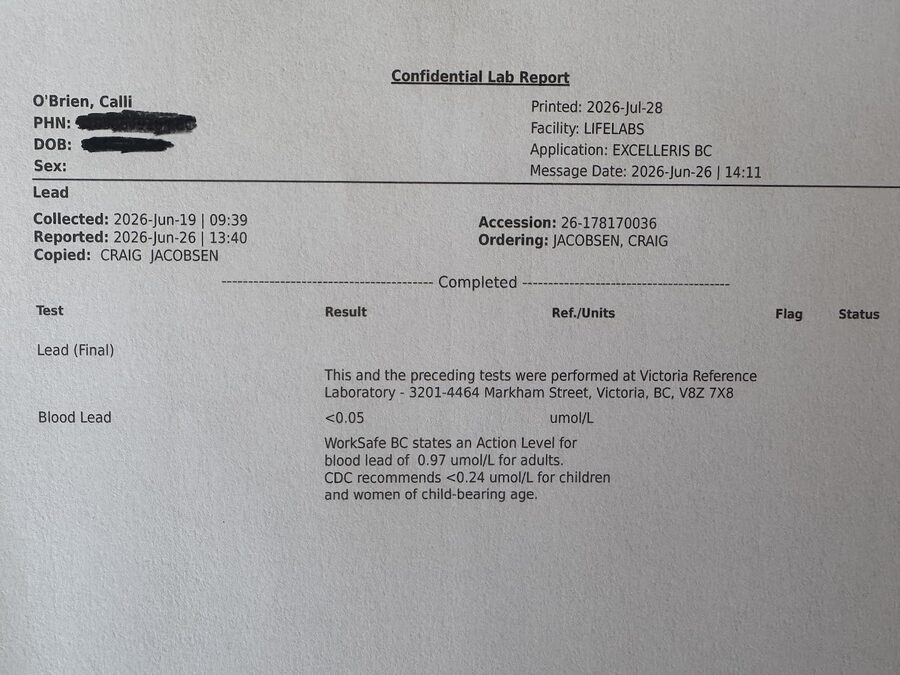
Calli O’Brien’s actual blood lead level laboratory test report showing result of less than 0.5 micrograms per decilitre
The laboratory reported Calli’s blood lead level as less than 0.5 micrograms per decilitre (<0.5 µg/dL).
In simple terms, that level is below the laboratory’s reporting threshold, indicating an extremely low level of lead in her blood. Now that’s great news!
What it shows is that, in her experience, long-term consumption of carefully sourced, high quality, independently tested, Japanese matcha has not resulted in elevated blood lead levels.
Do we now feel extremely safe drinking My Matcha Life® matcha? You bet we do.
Will we stop testing for heavy metals including lead? No.
Continuous testing is a must. Soil variations change, weather conditions change. We may need to change our growers or add more of them. Testing will always be a fundamental aspect of our company’s commitment to quality, and to our customers.
Questions to Ask When Choosing a Safe, High-Quality Matcha
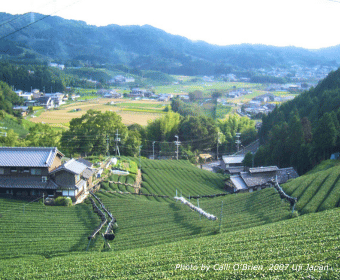
Farmer’s Tea Fields for Matcha, Uji Japan – photo by Calli O’Brien
If you’re concerned about heavy metals in matcha tea here are the questions you need to ask before buying:
✔ Is it grown in Japan?
Japan has some of the world’s highest standards for tea cultivation and food safety, making it a popular choice for premium matcha.
✔ Does the company provide independently tested heavy metal reports?
Look for companies that can explain their testing process and, where possible, share results or answer questions about them.
✔ Is the tea traceable?
Knowing where your matcha comes from adds another layer of confidence.
✔ Is testing performed regularly?
Annual or harvest-based testing provides more meaningful information than relying on a report that’s several years old.
✔ Does the company educate rather than simply market?
The best companies don’t just tell you their matcha is safe. They explain why.
Below is a list of commonly asked questions on the subject of lead as it relates to matcha green tea powder.
Frequently Asked Questions (FAQs)
Does all matcha contain lead?
Tea plants can absorb trace amounts of naturally occurring lead from the soil, so small amounts may be present in matcha. The important consideration is the level present and whether it falls within accepted safety standards.
Is Japanese matcha safer than matcha from other countries?
Japan has a long history of tea cultivation along with rigorous food safety standards. While no country’s tea should be judged solely by its origin, choosing reputable producers who conduct independent testing provides added confidence.
How much lead is in Japanese matcha?
The lead level in Japanese matcha varies by region and soil conditions, year to year. Our Tea Lover’s Organic Ceremonial Matcha tea tests at 0.073 µg lead per gram of matcha.
Is ceremonial matcha safer than other grades of matcha?
Ceremonial matcha and first harvest matcha are just as safe as a mid-summer or second harvest matcha. Ceremonial matcha is picked in the spring, a second harvest matcha is picked from those same tea plants, but in August. Because both grades originate from the same tea plant, grown in the same soil, there is little to no difference in their lead content.
Does organic matcha contain less lead than conventional matcha?
Good question. It used to be that pesticides contained lead, but modern-day pesticide formulations no longer do. Always good to make sure your matcha brand tests their organic and conventional matcha for lead as well as pesticides.
How often should matcha be tested?
Every harvest should be tested.
Is it safe to drink matcha every day?
For most healthy adults, high-quality matcha can be enjoyed daily as part of a balanced diet. If you have specific medical concerns or conditions, it’s always a good idea to speak with your healthcare provider. At My Matcha Life® we recommend a 1–2 gram serving of powder per cup, and 1–2 cups per day.
Is Matcha Tea from China Safe to Drink?
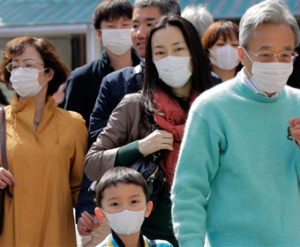
Crowd wearing masks due to poor air quality
A well-known tea study involving 1,225 samples of various varieties of Chinese tea found a great many exceeded recommended safety levels for lead:
China Grown Tea > Lead Test Results
- 24% of green tea: unsafe
- 32% of flavored tea: unsafe
- 53% of oolong tea: unsafe
- 59% of black tea: unsafe
Although China produces many excellent teas, it’s important to note that matcha tea is in powder form, and as a result it can potentially contain higher concentrations of heavy metals, including lead. Therefore, when purchasing matcha made in China, it’s advisable to ensure you have access to a corresponding heavy metal test result and speak with someone from the company.
Where Does My Matcha Life® Tea Come From?
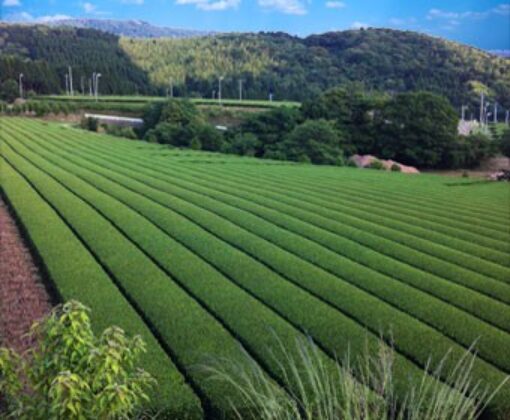
My Matcha Life matcha tea fields in Kagoshima, Japan
Our Tea Lover’s Organic Ceremonial grade matcha and Barista’s Premium Matcha are meticulously cultivated in the verdant mountain fields of Kagoshima, nestled near the southern-most tip of Japan (photo above). My Matcha Life® Matcha Lattes – Vanilla and Strawberry – use Barista’s Premium Matcha as their base. Barista’s is a blend of smooth tasting, high nutrient ceremonial 1st harvest matcha and bolder tasting, mid-summer matcha.
Tea leaves for our Foodie’s and conventional ceremonial matcha are grown and harvested in the lush tea fields near Uji, and Nishio, Japan. See map below.
Does My Matcha Life® Follow Any Special Standards?
Certainly, we take quality and safety standards seriously at My Matcha Life®. Our matcha production complies with stringent food safety regulations, including FSSC22000 international standards, which encompass the North American GMP standards for food quality control and HAACP procedures. NOP Organic/USDA Organic certifications are always up to date.
Radiation Concerns and Japanese Matcha
Is Japanese Matcha affected by radiation still an issue, you ask? Well, when it comes to My Matcha Life® matcha, you can rest easy. Despite the Fukushima tsunami wreaking havoc on four of Japan’s nuclear power reactors back in 2011, we continue to test for radiation.
Thankfully, our tea fields are situated far away from the affected site. Our Tea Lover’s Organic Ceremonial Matcha, as well as our Barista’s Premium Matcha is grown in Kagoshima, over 1,000 miles away from the damaged Fukushima plant.
Ensuring Radiation-Free Matcha
So, how can we be so sure that our matcha is radiation-free? Well, we are the only matcha company left whose matcha tea undergoes independent testing by American labs to check for radiation related to Fukushima.
Additionally, we conduct tests for heavy metal and bacterial contamination. We are not just sellers, but avid consumers of My Matcha Life® products, as are our friends, families, and valued customers. Our commitment is unwavering, aiming for nothing less than 100% safety assurance.
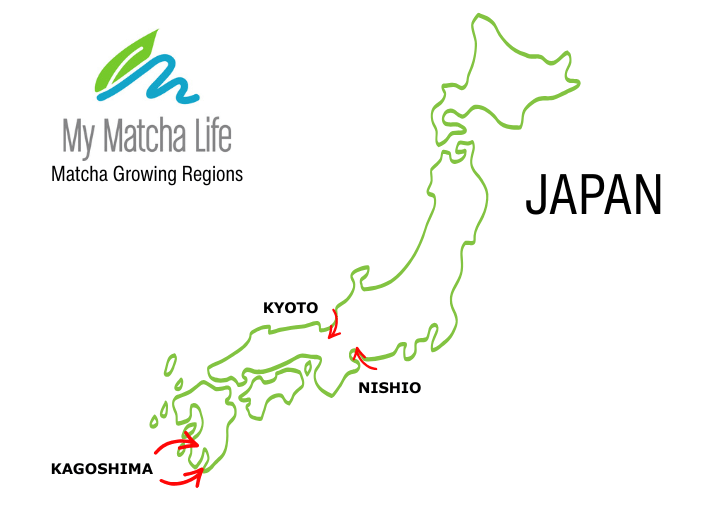
Map of My Matcha Life’s growing regions in Japan
About the Author — Calli O’Brien

Calli O’Brien My Matcha Life CEO and Co-Founder
Calli O’Brien is the Co-Founder and CEO of My Matcha Life® and has been drinking premium Japanese matcha since 2006.
She works directly with tea producers in Japan, regularly visits tea-growing regions, and is committed to sourcing exceptional matcha that is tested for quality and purity.
Her goal is to help people enjoy authentic Japanese matcha with confidence through education, transparency, and long-term relationships with trusted growers.
Matcha Career Highlights:
- Associate Producer – “The Way of Tea,” a 26-minute video documentary on Japanese Matcha (2012)
- Guest lecturer at the Smithsonian Institute (2014)
- Co-Founder and CEO of My Matcha Life Products Inc. (2014–Present)
- Co-author – The Matcha B2B Report (2015)
Learn how My Matcha Life® matcha tea is produced and its many health benefits.
Order your Tea Lover’s Organic Ceremonial Matcha today!